Setup
The numbers
Thermal gradient
A real gradient, 24–29°C warm against 18–21°C cool, so the animal chooses. The sheet states no separate night figure.
Why
Same scale on every sheet here, so two species compare by eye.
The sheet stateswarm 24-29 °C / cool 18-21 °C
Humidity
The sheet states50-60 %
UVB
Not needed for this species
Stated in the sheet, not inferred.
The sheet statesThey have no UVB requirement and will do well with a general 12-hour light cycle (12 hours with light, 12 hours without)
Enclosure and conditions
What your climate adds
This sheet states a range to hold. Your local climate decides how much work holding it is. Pick the nearest city: nothing is sent anywhere, the choice stays in this browser.
What it needs
Every line above is deduced from a value this sheet states, and names which one. Nothing here is a general recommendation. What the sheet does not state is listed too, rather than left out: a kit that looks complete is worse than one that names its gap.
The species
CITES II is a global listing and holds in every country. National law is not global, and we hold no national wildlife law for any country, Thailand included. Check your own authority before buying or selling.
Questions & sources
Common questions
Can it cope with the heat here?
This is the problem with this species. It comes from cool mountain country and does badly in constant warmth, so you would need a cooled room or unit.
Is it docile?
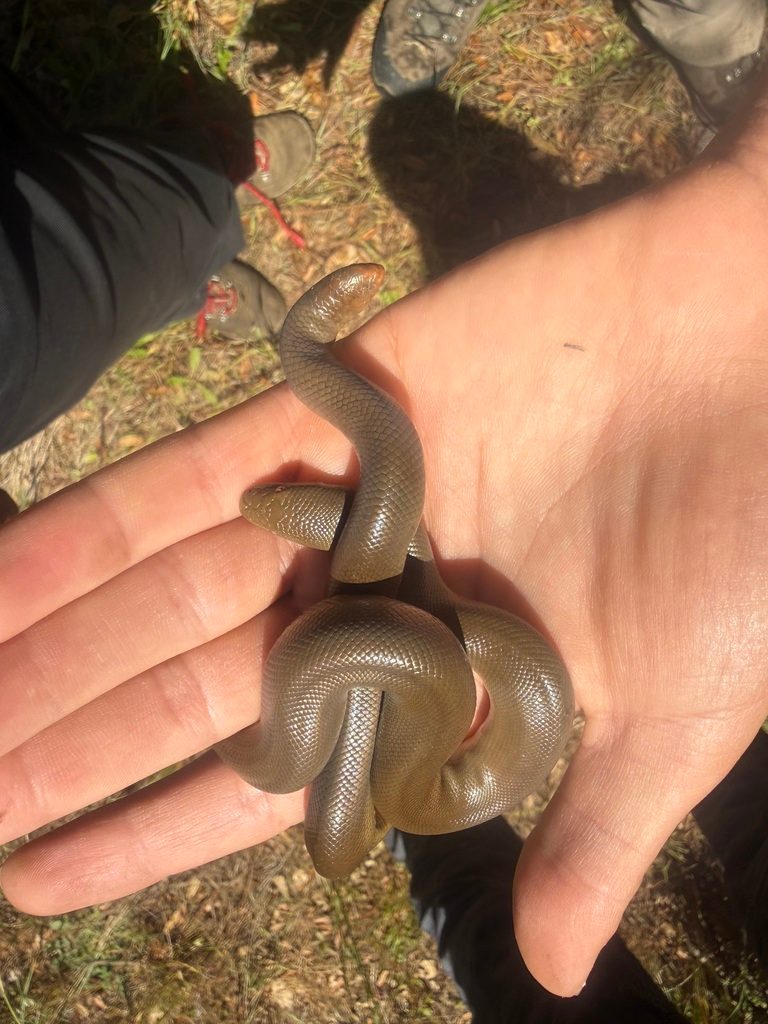
Famously so. It is one of the gentlest snakes there is and almost never bites, preferring to hide its head and curl up.
Why does it have a tail that looks like a head?
It uses the blunt tail as a decoy to protect the real head while it burrows away. It is a defence trick, not a deformity.
Is it easy to find?
No, they are uncommon in the trade and rarely offered, so availability is the main limitation rather than the price.
https://keepr.pet/husbandry/en/charina-bottae
Others in this group
What this sheet states
This sheet states 6 of 7 of the fields this product runs on. What is missing turns something off: day/night engine and awake count on the globe. We show the gap rather than fill it with a plausible number.
UVB is measured but does not count: it is absent from 420 of 678 sheets, and on most of them that is not a gap, since a nocturnal snake's sheet has no reason to state a UV index. Counting it would call the library incomplete without cause.