KeeprHusbandry You're a Pro? Click here to meet Rex
Atlas / Library / Tree Frog / Red-eyed Tree Frog
IntermediateCITES IIIUCN LC
Tree Frog

Red-eyed Tree Frog

Agalychnis callidryasกบตาแดง

Part of this is not on the page we cite. We opened it on 10 Aug 2026 and some of the degrees above are not stated there. The values above may still be right, but we cannot show you where they came from, and nobody here has checked them against a second source. Anything about a sick animal goes to a qualified exotic vet, not to a page. amphibiancare.com

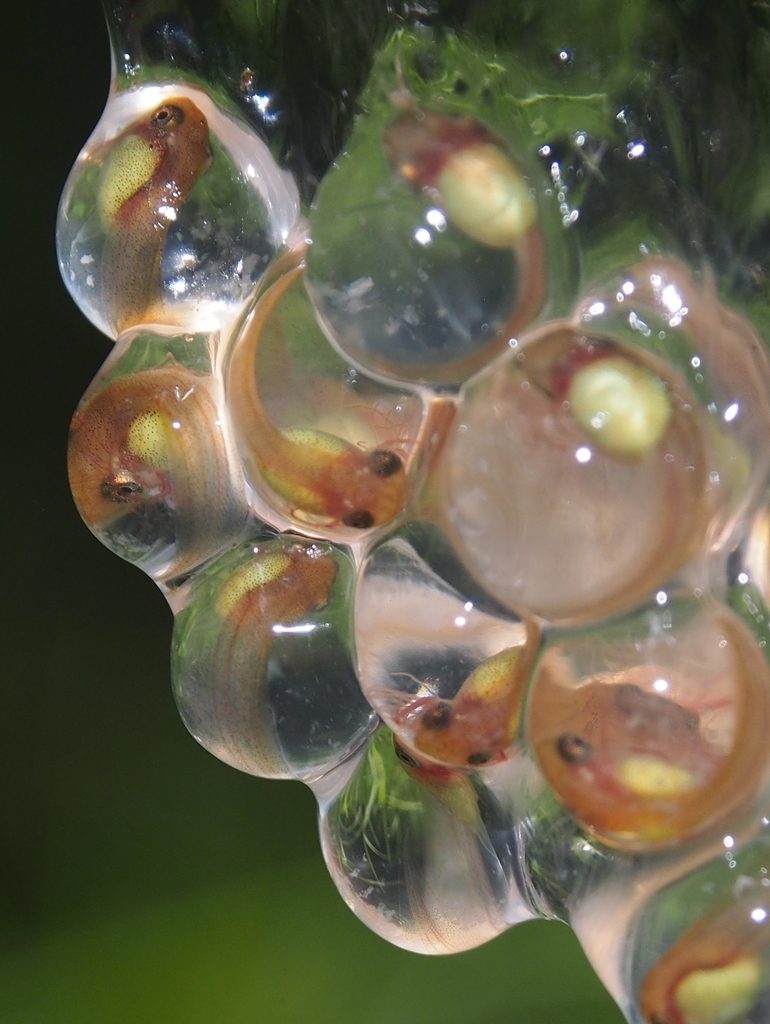
Photograph: Parsa Fard · CC BY

14:00
Day

Drag the sun. The sheet states a night temperature, so the rail follows it.

Arboreal · temperate · humidFrom the sheet: 24–28°C, humidity 80–100%

The way of life is written in this sheet, word for word. The climate words summarise the two figures above them, they do not add to them.

CITES II is a global listing and holds in every country. National law is not global, and we hold no national wildlife law for any country, Thailand included. Check your own authority before buying or selling.

Back to the globe My keep

https://keepr.pet/husbandry/en/agalychnis-callidryas

‹ All husbandry guides
Temperature24–28 °C
Humidity80–100 %
Enclosure45×45×60
Agalychnis callidryas, photographed in the wild
Photograph · Lena Struwe · CC BY-SA

Photographed by an observer on iNaturalist and published under a Creative Commons licence; the photographer and the licence are named under the image. It is not an animal of ours, and no animal was handled by us to produce it.

The numbers

Temperature

152025303540 °C
24–28°Ambient
20–22°Night

One ambient band, 24–28°C, dropping to 20–22°C at night. Same scale on every sheet here, so two species compare by eye.

The sheet states24-28 °C day; 20-22 °C night (important nocturnal drop); never >30 °C

Humidity

80–100%Target RH

The sheet states80-100%; osmosis-water misting 1-2×/day; shallow water dish

UVB

2–5%beneficial

The sheet statesUVB 2–5% beneficial (improves condition and breeding); photoperiod 10–12 h

Identity

Adult size

1.75 m5–6 cm ♂
1520100400 cm
5–6 cmNose to tail, adult

The size the sheet states for a grown animal. This sheet gives a figure per sex; the one drawn is marked.

Why

Two drawings, because they answer two questions. The silhouette is at true scale against a 1.75 m person: it says how big this animal actually is, which no number does for someone who has never seen one. The bar under it is logarithmic and shared by every sheet here, so a 2 cm isopod and a 4 m python both stay readable on the same axis and two species can be compared at a glance.

Adult size
♂ 5–6 cm SVL; ♀ 6–7.5 cm; juvenile ~1.5 cm
Lifespan
5–10 years in captivity (some sources report > 10 years)
Legal status
Unrestricted
Difficulty
Intermediate
Cohabitation
Groups of 2–4 individuals (several ♂ / a few ♀); community species; ♂ compete for ♀ without violence

How common this animal is

320,281Live individuals in declared US trade filings

NOT a measure of how many are kept. These filings count animals shipped for any purpose, including the food trade and laboratory supply, and they are United States records only. The three largest volumes in the source belong to a food frog, a bait species and the standard laboratory amphibian.

US Fish and Wildlife Service LEMIS declared wildlife import and export records, as compiled in the received dataset

Enclosure and conditions

Enclosure

45 cm60 cm
waterUVB tube
50100150200 cm
45 × 45 × 60 cmWidth × depth × height
20dm² of floor
Substrate: not in our dataWarm side: not in our dataHides: not in our data

Drawn from the stated numbers. Only what the sheet states is drawn inside.

Why

The rectangle carries the exact width-to-height ratio of the figures above it, and the ruler under it places that width on the 0–250 cm scale every sheet here shares, so two species still compare at a glance. Nothing is added that the sheet does not name: a lamp drawn on a sheet that never mentions one would be invented equipment. What the sheet leaves out is listed rather than left blank, because an empty tank reads as « none needed ».

The sheet statesArboreal vivarium 45×45×60 cm for 2-4 individuals; heavily planted; false wall + draining substrate + sphagnum + large broad-leaved plants for daytime rest

Terrarium / aquarium
Arboreal vivarium 45×45×60 cm for 2–4 individuals; heavily planted; false wall + draining substrate + sphagnum + large broad-leaved plants for daytime rest
Temperature
24–28 °C day; 20–22 °C night (important nocturnal drop); never >30 °C
Humidity / water
80–100%; osmosis-water misting 1–2×/day; shallow water dish
Lighting / UVB
UVB 2–5% beneficial (improves condition and breeding); photoperiod 10–12 h
Substrate / decor
Bioactive ABG + sphagnum + large leaves (Anthurium, Philodendron, Pothos); shallow water area for egg laying on leaves above; horizontal branches
Feeding
Crickets, Dubia roaches, adult sphinx moths; 3–4×/week juveniles, 2–3×/week adults; calcium + D3

What your climate adds

This sheet states a range to hold. Your local climate decides how much work holding it is. Pick the nearest city: nothing is sent anywhere, the choice stays in this browser.

Reproduction

Life course

Day 0Hatch
5–10 yrLifespan in care
5 yrMinimum commitment
Sexual maturityNot in our data

Read from the lifespan and maturity the sheet states, for animals in care and not in the wild.

Why

The minimum commitment is the low end of that lifespan, and the reproductive window is what is left after maturity: both are subtractions on stated figures, not figures of their own.

Sexing
♀ noticeably larger; ♂ slender, frequent and characteristic nocturnal calls
Maturity
18–24 months
Breeding trigger
Reduction of misting (dry period 2–3 weeks) then massive increase (rain simulation) + nocturnal T° drop to 20–22 °C; nocturnal breeding
Egg laying
Eggs laid on broad leaves above water; 20–80 eggs in translucent jelly; hatching 5–7 days; tadpoles fall into the water
Tadpoles / metamorphosis
Herbivorous-omnivorous (spirulina, algae, plant pellets); metamorphosis 6–9 weeks
Juvenile care
Delicate juveniles for the first 2–3 weeks; Drosophila melanogaster + springtails; very high humidity; planted juvenile vivarium

Common health problems

Chytridiomycosis (Bd)
Signssensitive species; PCR at acquisition; strict quarantine
Dehydration if humidity insufficient
Signsdull red eyes, wrinkled skin — increase misting immediately
Hemipenal prolapse in ♂ after prolonged amplexus
Signsisolate and veterinary consultation
Quarantine
Signs45 days; moist planted vivarium; T° 24–26 °C; PCR Bd; observe eye colour (bright red = healthy animal) and nocturnal activity

Good to know

  • Blood-red eyes with vertical slit pupil: opened abruptly, a visual 'flash' that disorients predators (startling coloration)
  • Laying on horizontal leaves above water: provide horizontal Philodendron or Anthurium leaves overhanging the water dish
  • Actual longevity often > 10 years: medium-term investment
  • Actual longevity often > 10 years — medium-term investment

Common questions

Will I get to see the red eyes, or does it sleep all day?

It sleeps tucked under a leaf with its eyes closed during the day and wakes at night. If you want an evening animal, this is a great one.

Is it a beginner frog?

Not really. It needs a tall planted tank with steady misting and good ventilation, so we usually suggest an easier tree frog first.

Can I handle it?

Only when necessary and with clean wet hands. Their skin is thin and absorbs whatever is on your fingers.

Can I keep a few together?

Yes, they are peaceful in groups of similar-sized frogs, and a small group looks very good in a planted tank.

What it needs

Enclosure at least 45 × 45 × 60 cmbecause enclosureArboreal vivarium 45×45×60 cm for 2–4 individuals; heavily planted; false wall + draining substrate + sphagnum + large broad-leaved plants for daytime rest
A thermometerbecause temp24-28 °C day; 20-22 °C night (important nocturnal drop); never >30 °C
A way to check the night figurebecause temp24-28 °C day; 20-22 °C night (important nocturnal drop); never >30 °C
A hygrometerbecause humidity80–100%; osmosis-water misting 1–2×/day; shallow water dish
UVB 2-5%, stated as beneficial rather than requiredbecause uvbUVB 2-5% beneficial (improves condition and breeding); photoperiod 10-12 h

Every line above is deduced from a value this sheet states, and names which one. Nothing here is a general recommendation.

Sources

Others in this group

What this sheet states

77%
TemperatureHumidityEnclosure sizeActivityOriginDietSourcesUVB

This sheet states 5 of 7 of the fields this product runs on. What is missing turns something off: day/night engine and awake count on the globe, the diet section. We show the gap rather than fill it with a plausible number.

UVB is measured but does not count: it is absent from 421 of 678 sheets, and on most of them that is not a gap, since a nocturnal snake's sheet has no reason to state a UV index. Counting it would call the library incomplete without cause.