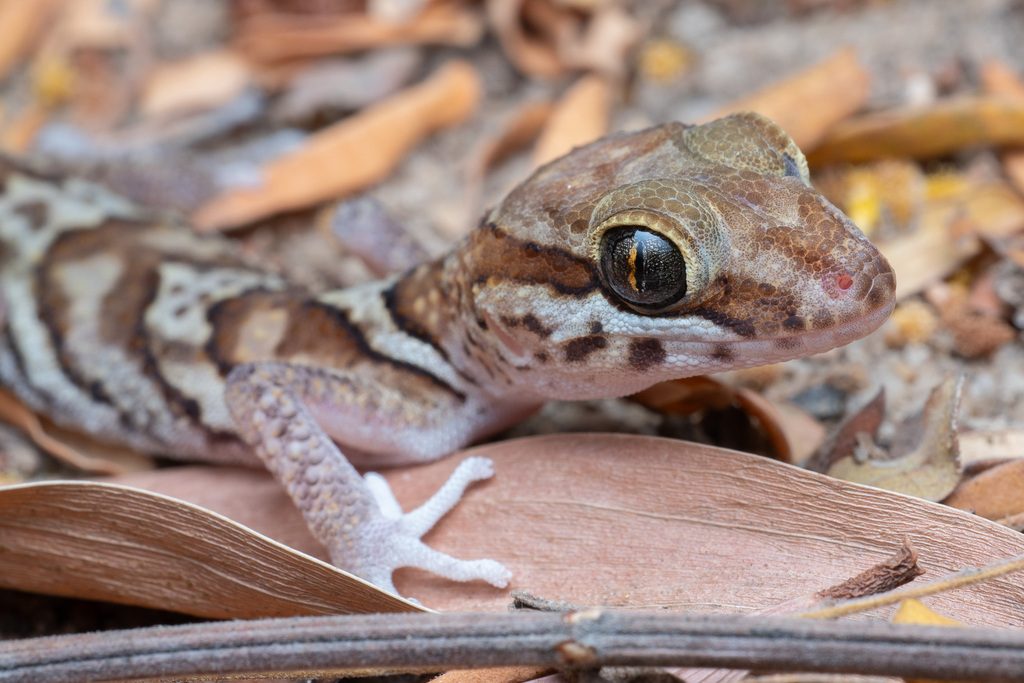
Setup
The numbers
Thermal gradient
Day: a real gradient, 29–32°C warm against 24–27°C cool, so the animal chooses. Night: 21°C.
Why
Same scale on every sheet here, so two species compare by eye.
The sheet stateswarm 29-32 °C / cool 24-27 °C / night 21 °C
Humidity
The sheet statesaround 55-65% (up to 70%)
UVB
Not needed for this species
Stated in the sheet, not inferred.
The sheet statesAs a nocturnal species, UV lighting is not required for this species, but isn't harmful if provided
Traceable. The figures above appear in the page we cite, which we opened on 10 Aug 2026. That means you can check them, not that we have confirmed they are right. joshsfrogs.com
Drag the sun. The sheet states a night temperature, so the rail follows it.
Enclosure and conditions
What your climate adds
This sheet states a range to hold. Your local climate decides how much work holding it is. Pick the nearest city: nothing is sent anywhere, the choice stays in this browser.
What it needs
Every line above is deduced from a value this sheet states, and names which one. Nothing here is a general recommendation. What the sheet does not state is listed too, rather than left out: a kit that looks complete is worse than one that names its gap.
The species
Identity
National law is not global, and we hold no national wildlife law for any country, Thailand included. Check your own authority before buying or selling.
Questions & sources
Common questions
Is it a good beginner gecko?
Yes. Small, cheap, hardy, and it eats crickets enthusiastically. A good first lizard.
Can I handle it?
Short gentle sessions are fine, but they are quick and will drop the tail if you grab them.
How long does it live?
Around 8 to 10 years, shorter than a leopard gecko, and females that breed hard live less.
Can I keep two together?
One male with females is fine in a decent-sized tank. Two males will fight.
https://keepr.pet/husbandry/en/paroedura-pictus
Others in this group
What this sheet states
This sheet states 6 of 7 of the fields this product runs on. What is missing turns something off: day/night engine and awake count on the globe. We show the gap rather than fill it with a plausible number.
UVB is measured but does not count: it is absent from 420 of 678 sheets, and on most of them that is not a gap, since a nocturnal snake's sheet has no reason to state a UV index. Counting it would call the library incomplete without cause.