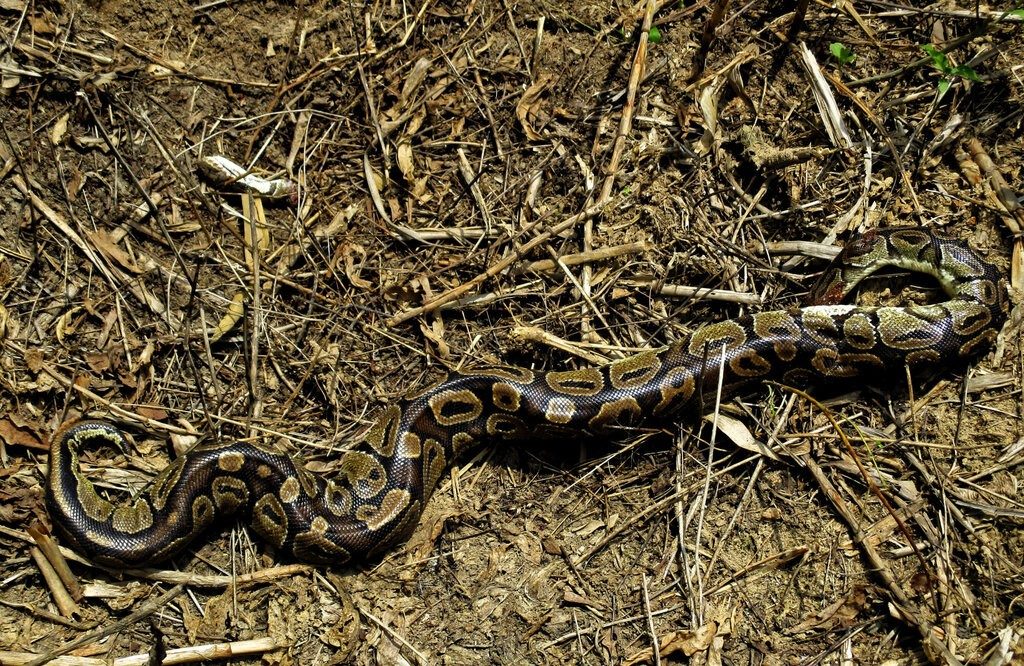
Can I keep it?
Setup
The numbers
Thermal gradient
Day: a real gradient, 31–33°C warm against 25–27°C cool, so the animal chooses. Night: never under 23–24°C.
Why
Same scale on every sheet here, so two species compare by eye.
The sheet stateswarm 31-33 °C (88-92 °F) / cool 25-27 °C (77-80 °F) / night ≥ 23-24 °C
Humidity
The sheet states55-65% (up to 70%+ during shed)
UVB
The sheet statesOptional; low level (T5 5–6%) beneficial
Part of this is not on the page we cite. We opened it on 10 Aug 2026 and some of the degrees above are not stated there. The values above may still be right, but we cannot show you where they came from, and nobody here has checked them against a second source. Anything about a sick animal goes to a qualified exotic vet, not to a page. reptilesmagazine.com
Drag the sun. Ball Python is Nocturnal, so what it is doing changes with the light. The sheet states a night temperature, and the rail follows it.
Enclosure and conditions
Enclosure
Drawn from the stated numbers. Only what the sheet states is drawn inside.
Why
The rectangle carries the exact width-to-height ratio of the figures above it, and the ruler under it places that width on the 0–250 cm scale every sheet here shares, so two species still compare at a glance. Nothing is added that the sheet does not name: a lamp drawn on a sheet that never mentions one would be invented equipment. What the sheet leaves out is listed rather than left blank, because an empty tank reads as « none needed ».
The sheet states120 × 60 × 60 cm (4×2×2 ft) for an adult
What your climate adds
This sheet states a range to hold. Your local climate decides how much work holding it is. Pick the nearest city: nothing is sent anywhere, the choice stays in this browser.
What it needs
Every line above is deduced from a value this sheet states, and names which one. Nothing here is a general recommendation.
- PVC enclosure 120×60×60
- Thermostat (pulse)
- Heat source (DHP/mat)
- 2 hides (warm+cool)
- Coco/cypress substrate
- Large water bowl
- Digital hygro/thermometer
- F/T rodents + tongs
Food
Diet
Feeding rhythm
Twenty-eight days, one row. Each band is a meal window. This sheet states a figure for each age, so each age has its row.
Why
The windows widen as they go because the interval is a range: four meals after a 10–14 day cycle land anywhere between day 40 and day 56. A young animal's row is drawn only where the sheet gives one: working it out by dividing the adult interval would be inventing a ration.
The sheet statesAppropriately sized rodents (mice → rats) · Every 10–21 days
Daily life
Behaviour and handling
Health
Common health problems
When to see a vet
This is not veterinary advice. If red flags appear, consult a qualified exotic (herp) veterinarian. Quarantine new arrivals 30–90 days.
Red flags
- open-mouth breathing
- months of weight loss
- stargazing
- persistent regurgitation
The species
Identity
Adult size
True scale, against a 1.75 m person
Logarithmic, the same axis on every sheet
The size the sheet states for a grown animal. This sheet gives a figure per sex; the one drawn is marked.
Why
Two drawings, because they answer two questions. The silhouette is at true scale against a 1.75 m person: it says how big this animal actually is, which no number does for someone who has never seen one. The bar under it is logarithmic and shared by every sheet here, so a 2 cm isopod and a 4 m python both stay readable on the same axis and two species can be compared at a glance.
Morphs
40 morphs, with how each one is inherited. 14 of them carry a documented welfare cost, and those come first.
No known risk26colour and pattern only
How common this animal is
Relative Google search interest for the species as a pet, 2020. The scale is relative within the study: 100 is the most searched reptile it measured, not a count of animals. Reptiles only, and only the species the study measured. An absent value means the study did not measure that species, not that nobody keeps it.
Valdez JW (2021), Using Google Trends to Determine Current, Past, and Future Trends in the Reptile Pet Trade, Animals 11(3):676
NOT a measure of how many are kept. These filings count animals shipped for any purpose, including the food trade and laboratory supply, and they are United States records only. The three largest volumes in the source belong to a food frog, a bait species and the standard laboratory amphibian.
US Fish and Wildlife Service LEMIS declared wildlife import and export records, as compiled in the received dataset
Reproduction
Life course
Read from the lifespan and maturity the sheet states, for animals in care and not in the wild.
Why
The minimum commitment is the low end of that lifespan, and the reproductive window is what is left after maturity: both are subtractions on stated figures, not figures of their own.
Good to know
- Curls into a tight ball head-in when scared: its whole defense (hence 'Ball').
- 'Royal' (regius): legend says Cleopatra wore them; sacred to the Igbo of Nigeria.
- The most kept pet snake on Earth and the backbone of the morph hobby.
- Curls into a tight ball head-in when scared — its whole defense (hence 'Ball').
The way of life is written in this sheet, word for word. The climate words summarise the two figures above them, they do not add to them.
CITES II is a global listing and holds in every country. National law is not global, and we hold no national wildlife law for any country, Thailand included. Check your own authority before buying or selling.
Questions & sources
Common questions
Does it bite?
Very rarely: docile, balls up instead.
How big will it get?
♀ up to ~1.5 m, ♂ smaller.
Why won't it eat?
Usually normal (season/shed/stress); vet only if real weight loss.
How long do they live?
20–30 years: a long commitment.
Going deeper
Research dossier: read at the source, not yet cross-checked by our team. Every figure links to the page it was read on.
In the wild
Wild ecology
Distribution habitat
Peer reviewed trade genetics reviewsciencedirect.com
Natural diet
Peer reviewed field diettandfonline.com
Behavioral summary
Academic secondaryanimaldiversity.org
Growth and body condition
Growth weight body condition
Wild sex growth study
Neonates
Juveniles
Adults
Max reported
Peer reviewed field growthjstor.org
Captive range study
Sex
Length cm range
53-148
Weight kg range
0.11-2.5
Peer reviewed captive observationaljournals.plos.org
Veterinary monitoring context
Veterinary husbandrybrightsidevets.com
Research ceiling
Health and welfare
Welfare evidence
Literature review
Systematic literature reviewpmc.ncbi.nlm.nih.gov
Spider
Peer-reviewed work associates the Spider phenotype with wobble and abnormal inner-ear morphology.sciencedirect.com pmc.ncbi.nlm.nih.gov
Breeding
Reproduction deep
Study 2026
Peer reviewed reproductivepubmed.ncbi.nlm.nih.gov
Health stop
- suspected follicular stasis
- retained ova/eggs
- coelomic distension with anorexia/lethargy
- abnormal prolonged reproductive cycle
Housing through life
Husbandry authoritative
Example 120cm snake cm
Thermal
Humidity
Uvb
Feeding
Monitoring
- regular weighing
- digital hot/cool thermometers
- IR thermometer
- hygrometer
Institutional husbandryrspca.org.uk
Behavior and enrichment
Housing study
Terrarium only behaviors
- basking
- climbing
- burrowing
- bathing
Peer reviewed behaviorjournals.plos.org
Genetics and morphs
Genetics
Confirmed welfare case
Peer-reviewed clinical/anatomical studies associate Spider phenotype with wobble syndrome and abnormal inner-ear morphology.sciencedirect.com pmc.ncbi.nlm.nih.gov
Next audit
- Spider-complex traits
- Champagne
- Hidden Gene Woma
- Super Cinnamon/Black Pastel
- Desert female infertility
- Banana/Coral Glow sex-linked inheritance
- BEL-complex allelism
- Clown/Piebald/Axanthic line provenance
Sex linked banana coral glow
Peer reviewed geneticsrevistas.usp.br
Possible het guardrail
Examples
- 66% het
- 50% het
Wild-caught or captive-bred
Trade history
Findings
Academic trade reviewsciencedirect.com
Academic trade reviewsciencedirect.com
Academic trade reviewsciencedirect.com
Detail
Caveats
- CITES reporting discrepancies
- quota exceedances documented
- ranching remains linked to wild collection and release systems
Academic trade reviewsciencedirect.com
https://keepr.pet/husbandry/en/python-regius
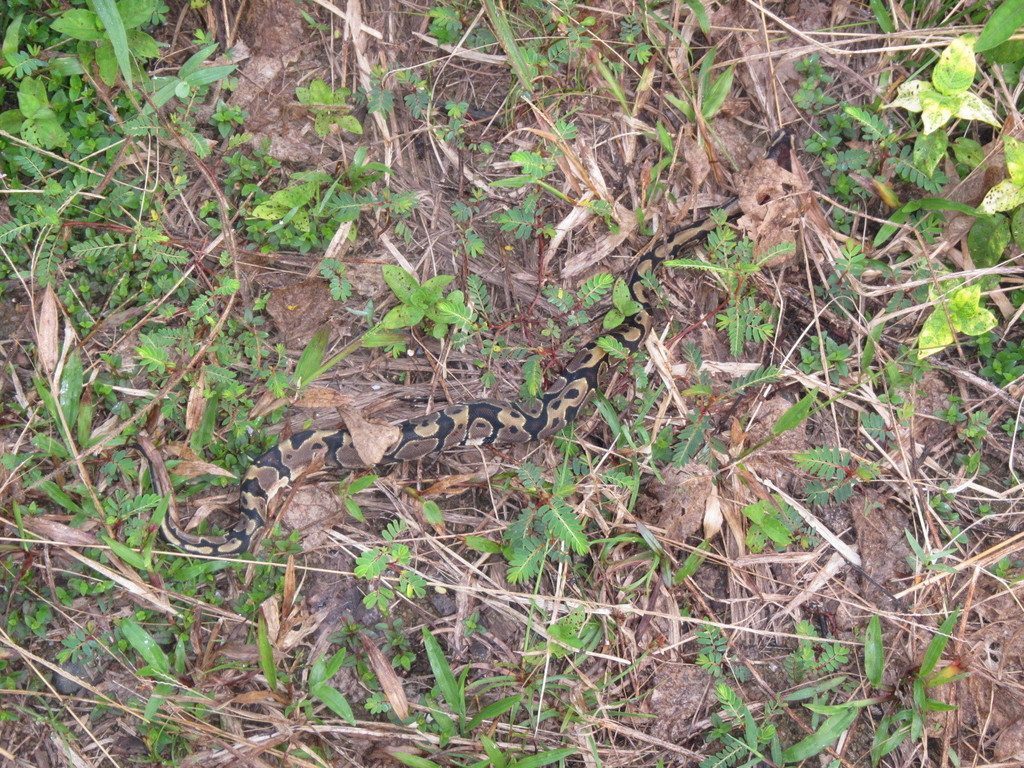
Photographed by an observer on iNaturalist and published under a Creative Commons licence; the photographer and the licence are named under the image. It is not an animal of ours, and no animal was handled by us to produce it.
Others in this group
What this sheet states
Every field this product runs on is stated here. That is not a claim that the values are right: it says what the sheet states, not whether it is true. Whether a human has read it is the badge at the top of this page.
UVB is measured but does not count: it is absent from 420 of 678 sheets, and on most of them that is not a gap, since a nocturnal snake's sheet has no reason to state a UV index. Counting it would call the library incomplete without cause.